
Our Projects
Sediments in hydropower plants: resource or waste?
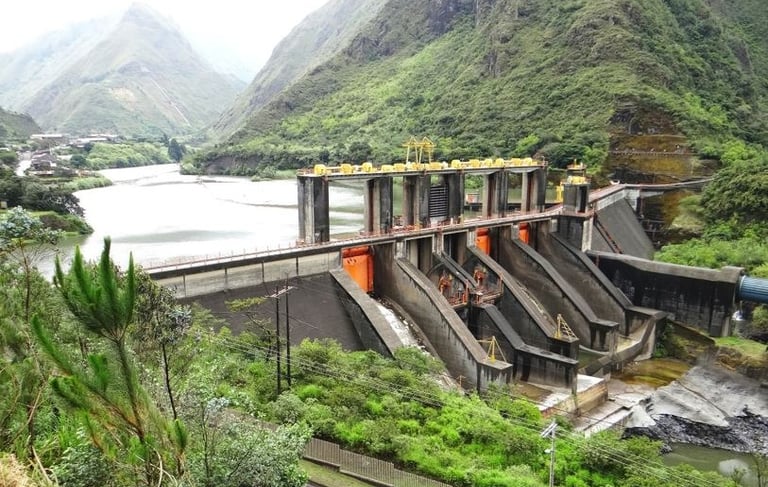
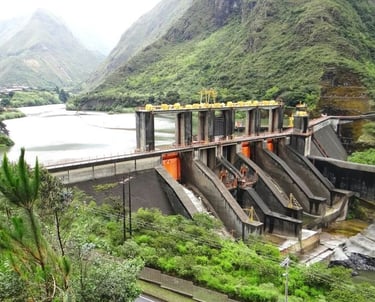
The project brings together the Central University of Ecuador and the Quito Electric Company, as academic and public institutions respectively, to develop a comprehensive solution to a nationally significant problem related to sediment accumulation in hydroelectric reservoirs, under a circular economy approach. The study was carried out in the Cumbayá and Guangopolo reservoirs.
To this end, a sediment retention strategy is proposed through the construction of an artificial wetland system, which is expected to achieve significantly higher sediment removal efficiency compared to natural sedimentation processes in hydropower reservoirs. This approach ensures proper sediment management while reducing environmental impacts such as greenhouse gas emissions, downstream eutrophication, and the degradation of natural habitats.
Furthermore, its implementation will improve hydropower generation by reducing turbine erosion risks and minimizing operational downtime associated with reservoir dredging and equipment maintenance. Finally, the evaluation of site conditions and sediment characterization will allow, on the one hand, the identification of suitable areas for the construction of wetland cells, and on the other hand, the potential reuse of untreated sediments within circular economy processes, generating value-added products for sectors such as aquaculture, agriculture, and energy.
Geothermal heat pump: the key to efficient renewable energy?
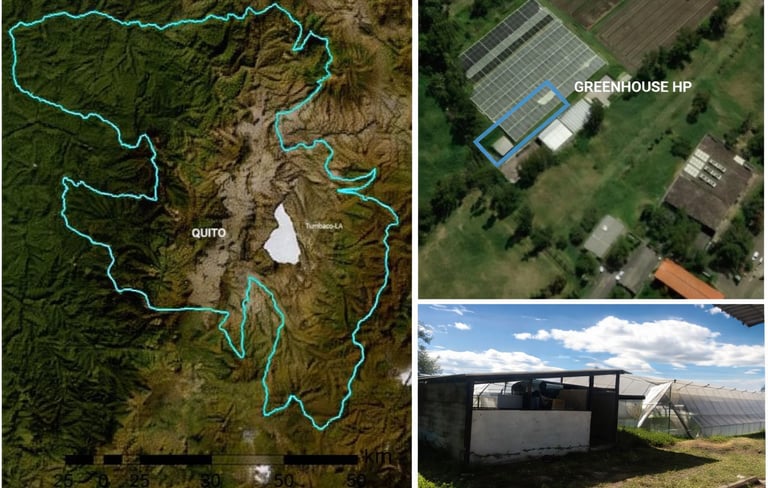
This work focuses on the harnessing of geothermal energy for a greenhouse in Ecuador using a heat pump, including its design, construction, and feasibility assessment.
The greenhouse is the first system of its kind operating in Ecuador and is located in Tumbaco–La Morita, in the province of Pichincha, approximately 25 km from Quito.
Globally, greenhouse cultivation covers approximately 500,000 hectares and efficiently produces more than half of the vegetables consumed worldwide. However, high-yield crops are typically highly energy-intensive. This study proposes the design and construction of a coupled geothermal heat pump system for a 470 m² greenhouse under Andean conditions, with temperature requirements of 15 °C at night and 30 °C during the day.
First, the study determined the energy potential of solar and geothermal sources through field measurements and by comparing the results with theoretical models. Subsequently, an energy balance of the greenhouse was developed to properly size the geothermal heat pump using the vapor compression cycle. Finally, the integrated system was constructed and evaluated using the Levelized Cost of Heat (LCOH). More information can be found at: https://doi.org/10.1016/j.heliyon.2021.e08608
DMQ reservoirs: what are their ecological dynamics and what do they reveal about their trophic state?
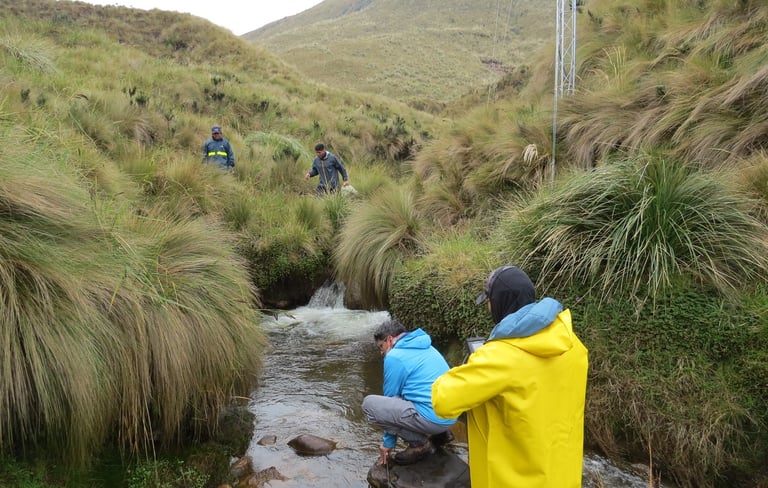
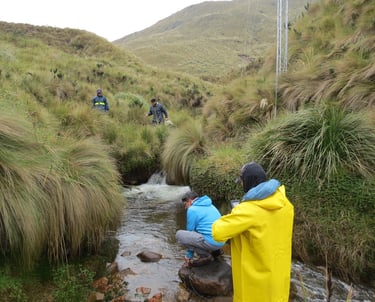
The project addresses several fundamental scientific questions that highlight the interdisciplinary nature of water resource management and conservation in páramo ecosystems. First, it aims to investigate the complex biophysical and hydrological processes that influence water quality and trophic dynamics in high-altitude reservoirs. This includes examining water inputs, sediment characteristics, and the interaction between water column parameters and benthic conditions. Understanding these processes is essential for assessing ecosystem health, predicting potential shifts in trophic states, and developing effective management strategies to maintain water quality.
Similarly, the project explores the impact of climate change on freshwater ecosystems, particularly in terms of altered precipitation patterns, temperature variability, and the associated changes in trophic states. These factors may significantly affect nutrient cycling, primary productivity, and overall ecosystem stability. By integrating these aspects, the study seeks to provide a comprehensive understanding of the drivers of ecological change in páramo reservoirs and to support the development of adaptive management strategies aimed at ensuring long-term water security and ecosystem resilience.
EL OBRAJE: an eco-industrial park for sustainable development
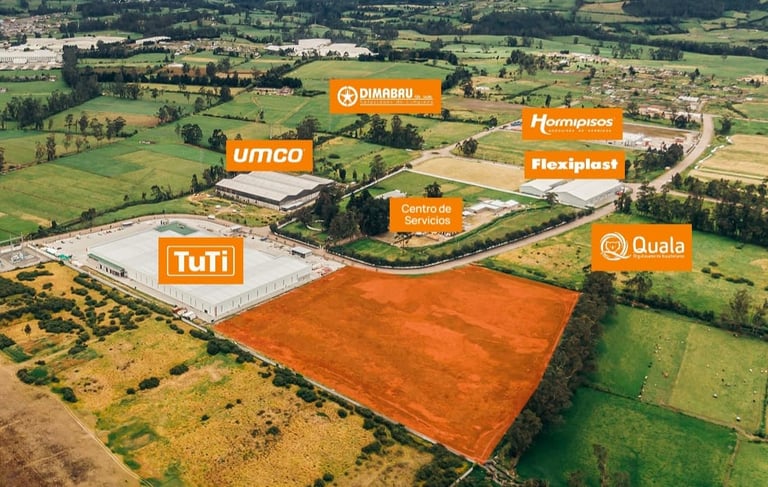
The cooperation project between the Faculty of Chemical Engineering of the Central University of Ecuador and AGROJOGA S.A. (El Obraje Industrial Park) aims to promote sustainable industrial development through the implementation of a district heating and cooling system as its central strategic initiative. This system will optimize energy use at the industrial level, enhancing energy efficiency, reducing emissions, and enabling the integration of renewable energy sources.
In addition, circular economy models, technical advisory services in energy efficiency, and pioneering assessments of the industrial sector’s water footprint under international standards (ISO 14046) are being implemented, consolidating a comprehensive sustainability approach.
El Obraje Industrial Park is recognized as a key industrial hub in southern Quito, located in Mejía canton, with the vision of becoming a benchmark for sustainability and social responsibility.
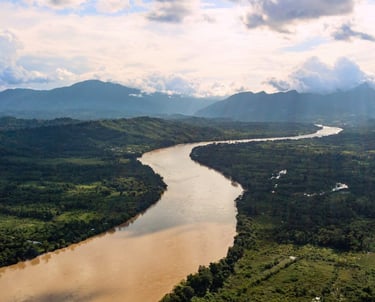
Are Andean rivers key hotspots of CO₂ and methane emissions in the Amazon?
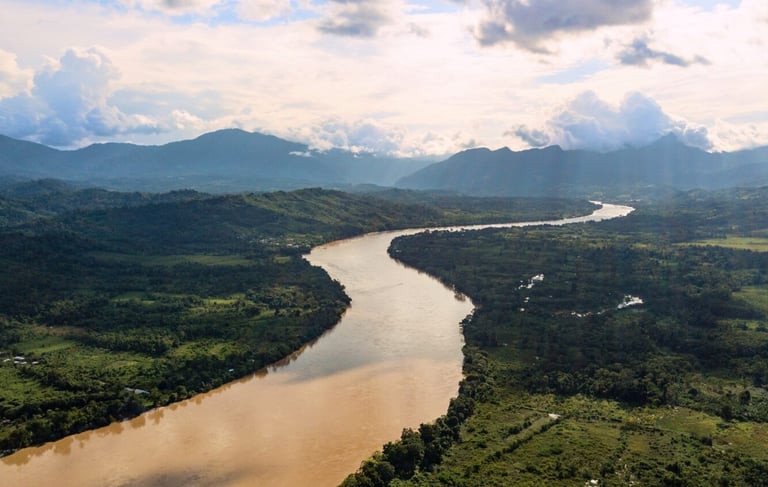
Rivers substantially contribute to global greenhouse gas emissions, yet emissions from headwater streams are poorly constrained.
Here, we report dissolved concentrations of carbon dioxide (CO2), methane (CH4), and nitrous oxide (N2O) in Andean headwater and piedmont streams in the Napo River basin in Ecuador, part of the Amazon River catchment. Concentrations increased exponentially with elevation decrease between 3990 and 175m above sea level.
Concentration changes scaled with catchment slope, and were attributed to variations in gas transfer velocity, forest cover, inundation extent, and water temperature. We estimate river emissions across the whole Amazon basin using existing data for the lowland Central Amazon. We find that Andean mountainous headwater and piedmont streams are hotspots of CO2 and CH4 emission. More information can be found at: https://doi.org/10.1038/s43247-023-00745-1
Energy return rate and blue hydrogen production potential in Ecuador’s oil industry
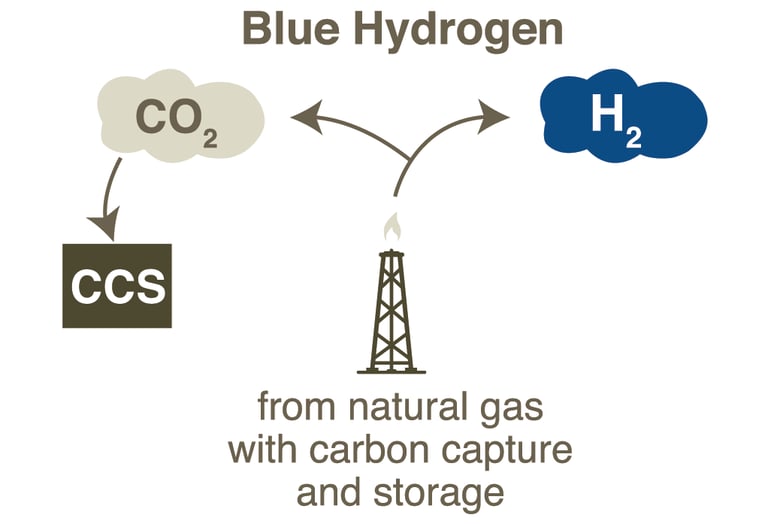
The study combines bibliographic and statistical analyses to define key criteria for plant location and to determine the amount of natural gas required for hydrogen production. It then proposes the main unit operations and processes needed to produce fuel gas, along with a CO₂ capture strategy based on geological storage and injection into extraction wells operated by the company.
A Class V economic analysis is conducted to estimate the costs of construction, start-up, raw materials, reagents, labor, equipment, and contingencies. The designed plant enables the production of high-purity blue hydrogen while significantly reducing greenhouse gas emissions and minimizing the environmental impact associated with E.P. PETROECUADOR’s operations.